








2026-10-18 【测知札鉴】古英语诗歌与Beowulf双语复习题集

课堂测试复习 · Old English Poetry & Beowulf
考试形式:三道问答题,重点是理解、逻辑与顺序。本文以复习课件和《诗歌文本资料2026秋版》中 Michael Alexander 译《Beowulf’s Fight with Grendel》及黑体段落为中心。题目是依据材料编写的复习预测,不代表老师已经确定的考题。
这次复习最重要的,是能把一个判断说清楚:它在讲什么,文本怎样表现,为什么这样写。 打斗的动机和经过需要懂,但黑体里的战前宣言、怪物的心理、声音、身体描写、基督教措辞和结尾同样重要。后面的中古、文艺复兴、浪漫主义等诗篇,不纳入本篇范围。
建议用法:先读第一、二部分建立框架,再按第三部分回到黑体原文;接着练三道综合题,最后遮住参考答案做分题练习。英文答案均为便于复述的自写参考,不是要求逐字背诵的标准答案。
一、先把三条线分清
1. 文学史线:作品为什么属于古英语诗歌
《Beowulf》是一首以古英语写成的英雄史诗,吸收了日耳曼、斯堪的纳维亚的英雄传说和口头叙事传统。故事的发生地、诗歌的语言、现存抄本的年代,是三件不同的事。 故事主要发生在北欧,不因为它属于英国文学,就自动发生在英格兰。
English overview
Beowulf is an Old English heroic epic that draws on Germanic and Scandinavian traditions. Its story is set in Scandinavia, while its surviving form belongs to the literature of Anglo-Saxon England. We should distinguish the setting of the story, the language of the poem and the date of its surviving manuscript.
课件的历史顺序,可以先记为:不列颠的凯尔特背景,罗马统治,盎格鲁、撒克逊等日耳曼群体的迁入与定居,古英语及其文学传统的发展。 学习的重点是这些变化如何影响语言和文化,不必把每个年份都背成考点。
2. 诗歌形式线:为什么要读出声音
课件第2—3页强调诗歌与歌唱、吟诵的联系。对古英语诗歌而言,要特别注意重音、头韵和诗行中的停顿。它的音乐性不能简单等同于“每句末尾押韵”。
| 概念 | 简明理解 | 在本次阅读中看什么 |
|---|---|---|
| Oral tradition 口头传统 | 诗歌与讲述、聆听和记忆相连 | 故事怎样被讲出来,听众怎样感到紧张 |
| Alliteration 头韵 | 相邻或相关的重读词重复起始音 | 战斗、恐惧、断裂等描写怎样获得声音力量 |
| Stress 重音 | 有些音节读得更突出 | 英雄动作和关键名词怎样形成节奏 |
| Caesura 行中停顿 | 一行内部有结构性的停顿 | 意义与呼吸怎样分组,而非只看标点 |
| Variation 变称 | 从不同身份或角度称呼同一对象 | Beowulf 的亲属、战士、保护者身份怎样交替出现 |
| Kenning 隐喻性复合称谓 | 用有意象的组合指代事物 | 身体和器物怎样通过形象化名称呈现 |
阅读提醒:课内所给的是现代英语译文。它保留或模拟了许多声音效果,但不能把译文每一行的节奏都直接当作古英语原文的格律。头韵看的是声音,也不只是字母拼写相同。复合词不全是 kenning;亲属称呼和宗教尊称也不能不加区分地都叫 kenning。古英语头韵说明见 University of Kentucky 的 Electronic Beowulf。
3. 文本事件线:这段选文发生了什么
| 顺序 | 文本中的变化 | 复习时要追问 |
|---|---|---|
| 战前 | Beowulf 放下武器,公开说明自己的选择 | 自信、荣誉承诺与信仰怎样并存? |
| 等待 | 同伴睡下,他保持警觉 | 叙述怎样让读者预感危险? |
| 来袭 | Grendel 闯入大厅,把睡着的人视为食物 | 他的欲望、态度和力量怎样被写出? |
| 逆转 | 他遭遇异常强大的握力,急于逃走 | 谁在掌握战斗?怪物心理怎样变化? |
| 结果 | 手臂被撕裂,他负重伤逃离,后来死去 | 这场胜利怎样获得身体上的证据? |
| 公开确认 | 众人看到战斗遗迹,恐惧转为确信 | 个人功业怎样成为群体共同承认的事实? |
English sequence
Beowulf prepares and makes his public promise. Grendel enters the hall expecting to feed on the sleeping warriors. When he meets Beowulf’s grip, his confidence turns into fear. He loses his arm, escapes with a fatal wound and dies in his lair. The visible remains and the traces of his flight allow the community to recognize the victory.
二、人物、动机与冲突:不能混成一句“英雄打怪”
Beowulf 为什么战斗
他要保护 Hrothgar 的人民,让 Heorot 摆脱反复的杀戮。这也为他提供了实践英雄荣誉、证明能力并兑现公开承诺的机会。群体的安全与个人的声誉,在英雄文化中相互关联。 把他写成纯粹为了炫耀,或完全没有荣誉动机,都不够完整。
Grendel 为什么来袭
就这段选文而言,叙述直接突出他的吞食欲望、对人类的敌意和对神的对立。他以为大厅里的战士会成为食物,攻击时甚至感到满足。关于他为何厌恶大厅的欢庆和歌声,属于全诗更早的背景;可以帮助理解,但不应冒充本节选已经展开讲述的内容。
为什么选择 Heorot 作为冲突中心
Heorot 是饮宴、聚会、交往与赠礼的场所,连接领袖和战士,也体现共同体的秩序。因此,Grendel 袭击大厅,威胁的是一群人的共同生活。Beowulf 清除威胁的意义,也超出了个人比武的胜负。
三场战斗各有位置
课件提到的全诗顺序是 Grendel、Grendel’s mother、the dragon。第一场保护丹麦人的大厅;第二场回应 Grendel 母亲因儿子死亡而发动的复仇;第三场发生在 Beowulf 年老、已经为王之后,涉及保卫自己的人民,也以他的死亡告终。
范围提醒:课堂文档这里实际选入的是第一场。母亲和龙的故事用于交代全诗结构,不应挤掉对黑体段落的细读。要比较三个对手的动机时,也不能把报复、吞食和守护/失去宝藏后的报复全部写成同一个原因。
三、黑体段落逐组细读
以下沿用资料边栏的行号定位;段落起止可跨过标号。文档另将 horned 单独标黑,也需要理解。这里不重印整段现代译文,而是指出回读时应该抓住的词、动作和关系。
A组:开头至战前宣言,约670行前后至680行之后
看什么:神安排保护者,英雄相信自身力量与神的眷顾;他卸下护甲、交出武器,然后发表公开宣言。
最重要的逻辑:Beowulf 说怪物不能以剑术作对等回应,所以自己也不用兵器。这是他公开提出的理由,体现对自身力量的信心与英雄式的公平观。后文才解释普通刀剑伤不了 Grendel。“他选择不用剑的理由”与“后来揭示的刀剑无效”,不能倒过来混为一谈。
宣言也具有社会作用:他先把话说在众人面前,之后必须用行动兑现。结尾对这次承诺的回扣,使前后的叙事连在一起。
还要看:胜负最终交给神裁定,与英雄主动准备、勇敢行动并不矛盾。这段把人的行动和神的权威放在一起,而非让人物什么也不做地等待命运。
可练的问题:Why does Beowulf fight without weapons, and what does his speech reveal about him?
B组:闯入大厅至握力逆转,约720—750行前后
看什么:门、眼睛、睡着的战士、吞食动作、怪物的期待与突然恐慌。
Grendel 的强力先通过破门表现,凶残再通过吞食的动作展开。叙述还进入他的内心,让我们知道他以为自己会轻易得手。随后,Beowulf 的握力把这种预期打断:主动接近猎物的一方,变成只想逃走的一方。
这里既有动作,也有叙事安排。读者在真正胜负揭晓之前,已经得到关于怪物计划不会实现的提示。怪物所想与读者所知之间出现距离,增加了期待感。
不要自行补写:文本写 Beowulf 观察怪物的行动,但没有明说他“故意牺牲同伴来做实验”。答题时可以讨论观察与悬念,不能把这种推测当作原文明示的动机。
可练的问题:How does the passage change Grendel from a confident attacker into a frightened victim?
C组:丹麦人听到战斗,约790行之前
看什么:听觉、哀号、怪物的痛苦,以及叙述给他的道德和宗教身份。
旁观者没有直接参与搏斗,声音却把危险传到大厅外。刺耳、陌生而痛苦的声响,使战斗具有可听见的强度。更重要的是,发出哀号的是先前占上风的怪物。声音同时呈现恐惧,也提示力量关系已经逆转。
形式与内容连起来:分析声音时,不必只列“有头韵、有拟声”。要接着解释:这些声音怎样让口头朗读更有冲击,怎样让听众感到怪物的失败,怎样服务人物塑造。
可练的问题:What does the description of sound contribute to the battle scene?
D组:身体崩裂与败退,约810—820行前后
看什么:握力、肩部、肌肉、筋腱和关节的连续变化,以及胜利和失败如何分配给双方。
暴力不是一个笼统的“打败”就结束了。诗人把强大的身体拆成具体部位,让看似不可战胜的怪物显露出可被摧毁的物质性。连续的破裂动作既强调英雄的超常力量,也让战局不可逆转。
形象化的身体复合称谓值得留意:它们把身体看成相互连结的结构。因此,关节和连接的断裂,在语言上也呼应怪物力量的瓦解。
顺序要准确:Grendel 在大厅里失去手臂,受了致命伤后逃离;末尾再确认他在栖身处死亡。不要写成 Beowulf 当场在大厅里斩下他的头,或用剑刺死他。
可练的问题:Why does the poet describe the injury through several separate parts of the body?
E组:翌日追踪与结尾,约840—850行前后
看什么:众人到场、脚印和血迹、水面的变化、对怪物毫无怜悯,以及结尾的宗教判断。
战斗从一个夜间的个人行动,转成白日里共同体可以看见和确认的事件。血迹和逃跑痕迹让怪物的败亡具有外部证据;众人的到场则把胜利纳入公共记忆。
结尾没有让怪物的死亡成为中性的自然事实。叙述把它纳入基督教的善恶框架,也表现受害群体对威胁解除的态度。可以解释这种叙述立场,也可以在有根据时讨论它怎样排除对怪物的同情;不要把自己的评价假装成诗中人人共有的看法。
可练的问题:How does the ending turn Grendel’s physical defeat into a public and moral conclusion?
单独标黑的 horned:先找它修饰什么
它在这里修饰的是大厅建筑,联系 Heorot 的鹿角意象和屋顶形状理解,并不是说睡在里面的战士或 Grendel 长了角。读修饰语时,先找中心名词,再看意象的作用。它也提醒我们:大厅不仅是一个地点,还是被反复命名、带有象征意味的共同体空间。
回到原文时的短语定位
下面只摘很短的词组帮助找位置;理解仍需放回原段落。
| 选文短语 | 指向或含义 | 怎样用于回答 |
|---|---|---|
| King of Glory | 神的尊称 | 开头把保护行动置于神的权威下,不是给 Hrothgar 起新王号 |
| Maker’s favour | 造物主的眷顾 | 与英雄对自身力量的信任并列,联系人的行动与信仰 |
| apportion the honours | 分配胜利的荣耀 | 宣言接受神对结果的裁定,不能只读出自负 |
| the faster man | 反应更快的 Beowulf | 此处从怪物伸手转到英雄反制,要找准主语 |
| his heart panicked | Grendel 内心惊恐 | 直接体现预期破灭,不只是从动作间接推测 |
| song of ill-success | 失败者的哀号 | 过去的掠食者如今发出痛苦声音,措辞带有反讽意味 |
| bone-locks | 关节的形象化称谓 | 身体如同连结的结构,断裂呈现力量瓦解 |
| heathen soul | 带宗教立场的灵魂表述 | 结尾从肉体死亡转向叙述者的精神与道德判断 |
四、三道综合模拟问答
这三题分别练诗歌特点、人物与冲突、文本细读。三道题的分工只是复习安排,不是对真实试卷结构的保证。
模拟题一:古英语英雄诗歌的特点
Question
What makes Beowulf an example of Old English heroic poetry? Explain its background, poetic features and values with reference to the class extract.
中文题意:为什么《Beowulf》能体现古英语英雄诗歌?结合课堂选文,说明背景、形式与价值观。
答题顺序:先定位作品,再讲声音与叙事方法,最后用人物行为说明英雄价值。不要只背定义,也不要只复述打斗。
English model answer
Beowulf is an Old English heroic epic drawing on Germanic and Scandinavian traditions. Its association with oral storytelling helps explain the importance of sound, memorable descriptions and public heroic deeds. Old English verse characteristically uses stress, alliteration and a pause within the line, rather than depending on regular end rhyme. The modern English class translation also gives us strong effects of sound and rhythm, especially in descriptions of violence and fear.
The poem values courage, reputation, loyalty and the protection of a community. In the extract, Beowulf publicly promises to face Grendel and later fulfils that promise. His strength matters because it frees Heorot from repeated attacks. At the same time, the narrator places the action within a Christian moral framework. The extract therefore combines heroic action, a communal understanding of honour and religious interpretation.
中文理解
先说明它是古英语英雄史诗,承接日耳曼和北欧传统。口头讲述的背景,使声音、容易记忆的称谓以及可公开传颂的英雄行动格外重要。形式上应讲重音、头韵和行中停顿,而不是把它概括成整齐的尾韵诗。这里分析的是现代英语译文的效果,要与原文格律区分。
价值层面则联系具体行为:宣言、兑现承诺、保护大厅和共同体。宗教叙述又把这些行动置于善恶秩序中。这样,形式、人物和文化背景就连起来了。
模拟题二:冲突的动机和发展
Question
Why do Beowulf and Grendel fight, and how does the extract develop the conflict from the preparations to Grendel’s defeat?
中文题意:双方为什么战斗?从战前准备到 Grendel 败亡,冲突如何发展?
答题顺序:双方动机,徒手宣言,入侵与期待,握力逆转,致命伤与败退,群体确认。
English model answer
Beowulf fights to protect Hrothgar’s people and to fulfil the heroic promise he has made. Grendel enters Heorot as a hostile predator who expects to feed on the sleeping warriors. The hall represents a human community, so their conflict involves its safety as well as the hero’s reputation.
Before the encounter, Beowulf gives up his weapons because Grendel cannot meet him in armed combat on the same terms. This decision shows confidence and an idea of honour. It should be distinguished from the later explanation that swords cannot harm the monster. The conflict then develops through a reversal. Grendel first breaks into the hall and expects success, but Beowulf’s grip makes him panic. He loses his arm, escapes with a fatal wound and dies in his lair. The community’s inspection of the traces of his flight confirms the result. Beowulf’s earlier words have become a publicly recognized deed.
中文理解
英雄的保护责任与荣誉承诺,对上怪物的敌意和吞食欲望。叙事先让我们知道双方的期待,再用握力把强弱关系翻转。特别要区分“不用剑的公开理由”和“刀剑实际上无效”的后文解释。
最后也不要停在“怪物输了”:手臂、血迹、败退和众人的见证,把英雄的胜利变成共同体可以确认的事实,回应战前已经说出的承诺。
模拟题三:黑体段落怎样产生意义
Question
How do the highlighted passages use description, narrative perspective and religious language to shape our understanding of the hero and the monster?
中文题意:黑体段落如何通过描写、叙述视角和宗教语言,塑造英雄与怪物?
答题顺序:怪物内心与预告,动作和声音,身体破裂,宗教命名,众人反应。选两三个证据讲清楚,胜过把所有修辞名称列一遍。
English model answer
The highlighted passages shape the reader’s judgement as well as describe a fight. The narrator enters Grendel’s mind and reveals his pleasure at the prospect of feeding. This presents him as a dangerous predator. His later panic reverses that position and makes Beowulf’s power visible through the monster’s response. Hints that Grendel’s plan will fail also guide the reader’s expectations.
Sound and bodily detail intensify the encounter. The listeners hear the monster’s painful cries, while the account of the injury moves through muscles, tendons and joints. These details make his defeat concrete and give the scene force when read aloud. Religious names and the final judgement place physical violence within a Christian opposition between protection and evil. Finally, the gathering of people and their lack of pity show the community’s response. The ending confirms not only that a body has been defeated, but that a shared threat has been removed.
中文理解
这题要回答“怎样写”而非再讲一遍故事。怪物的满足和恐慌形成心理对照;读者提前得到的提示,与怪物的误判形成叙事上的距离。哀号让听众听见逆转,逐层的身体描写让败亡变得具体。
宗教称谓和结尾的判断进一步引导读者立场,众人的反应则说明共同体如何理解这次胜利。分析时保持“描写方法—读者效果—主题作用”的连接。
五、分题练习:先回答,再展开参考
01 为什么诗歌要读出声音
Q. Why is reading aloud especially useful for understanding Old English poetry?
为什么朗读有助于理解古英语诗歌?
展开英文参考与中文思路
English answer
Reading aloud makes stress, repeated sounds and pauses easier to notice. These features organize attention and create momentum, especially in a scene of danger or violence. They also connect poetry with oral performance and listening. In our class translation, the changes between forceful movement and painful cries help us hear the reversal of power. Sound should therefore be related to meaning, not treated as decoration.
中文思路:重音与停顿帮助理解句子的分组,声音重复加强动作与情绪,朗读又联系口头表演传统。结合本选文说明声音如何表现危险与逆转即可。不要答成“所有诗都必须押韵”。
02 英雄宣言只是自夸吗
Q. What is the function of Beowulf’s boasting speech before the fight?
战前宣言在人物塑造和叙事结构上有什么作用?
展开英文参考与中文思路
English answer
The speech expresses confidence, but it also creates a public commitment. Beowulf explains how he intends to fight, accepts the risk and places the outcome under divine judgement. His words invite others to judge him by what he does next. When the account later returns to the promise he has fulfilled, the speech becomes part of the poem’s structure. Reputation depends on the connection between a declared intention and an accomplished deed.
中文思路:自信是内容之一,更重要的是公开承诺、接受评价和前后照应。不要只把 boasting 当作现代语境里空洞的“吹牛”,也不要忽略其中确实存在的自我肯定。
03 不用武器与刀剑无效是什么关系
Q. Does Beowulf choose to fight unarmed simply because he already knows swords cannot hurt Grendel?
能否说他早知刀剑无效,所以才徒手战斗?
展开英文参考与中文思路
English answer
That explanation is not what his speech gives us. Beowulf says that Grendel cannot answer him with the same skills in armed combat, so he will fight without weapons. Later, when the other warriors try to help, the narrator explains that swords cannot harm Grendel. We should distinguish the hero’s stated reason from information revealed by the narrator. The later detail strengthens the significance of Beowulf’s grip, but it should not replace his earlier explanation.
中文思路:这是非常值得练的“文本先后顺序题”。先说明人物在当时说了什么,再说明叙述后来补充了什么。文中没有充分依据,就不要替人物追加先知式动机。
04 自身力量、神和命运怎样并存
Q. How are human strength, divine help and fate related in the extract?
英雄相信自己,又把胜负交给神,这是否矛盾?
展开英文参考与中文思路
English answer
The extract gives human action and divine authority different roles. Beowulf actively prepares, keeps watch and uses extraordinary strength. At the same time, the narrator interprets protection and victory through God’s power. References to fate do not make the hero passive. Instead, the poem presents courageous action within a larger order that the individual does not fully control. The tension helps us understand the combination of heroic tradition and Christian narration.
中文思路:人物的行动能力没有被取消,神的权威也没有被排除。结合战前准备、警醒与真正出手说明,不要只抽象地说“命运决定一切”。
05 怎样证明 Grendel 的心理发生变化
Q. What changes in Grendel’s expectations and emotions during the encounter?
如何用文本说明怪物从自信走向恐慌?
展开英文参考与中文思路
English answer
At first, Grendel expects the sleeping warriors to become an easy meal. His pleasure and confidence show that he sees himself as the one in control. Beowulf’s grip destroys that expectation. Grendel recognizes a strength beyond his experience and wants to escape. His movement towards the hall becomes a desperate movement away from it. The psychological reversal makes the hero’s superiority clear without relying only on the narrator’s praise.
中文思路:证据链是“期待食物—感到满足—遭遇握力—惊恐—急于逃离”。特别指出,怪物的反应本身也在证明英雄的力量。
06 叙述为什么先写一名战士遇害
Q. What is the effect of showing Grendel kill a sleeping warrior before he meets Beowulf?
这段残酷描写有什么叙事作用?
展开英文参考与中文思路
English answer
The killing establishes the immediate danger and shows why the community needs protection. It gives concrete force to Grendel’s predatory expectations before the encounter changes direction. The contrast between a helpless sleeping victim and the resistance of Beowulf prepares the reversal. We can explain this narrative effect without claiming that Beowulf deliberately sacrifices his companion. The extract shows him watching, but does not explicitly give that intention.
中文思路:突出威胁,证明保护的必要性,为强弱反转铺垫。把“叙述安排的效果”和“人物是否故意这样做”分开,是细读中的基本要求。
07 为什么写大厅外的人听见声音
Q. How does the use of listeners affect the description of the struggle?
旁听者的存在怎样扩大了这场搏斗的意义?
展开英文参考与中文思路
English answer
The listeners carry the scene beyond the two bodies inside the hall. They experience danger through noise rather than direct sight. The painful cries of the monster make the force of the struggle audible and reveal that the attacker is losing control. This creates a second perspective on the encounter. It also suits a poem associated with oral performance, because the audience can imaginatively join those who hear the battle.
中文思路:大厅内有行动,大厅外有听觉反应;读者又通过语言进入这个场景。声音连接三个层面,既制造强度,也传达逆转。
08 身体细节怎样服务英雄形象
Q. What do the descriptions of muscles, tendons and joints add to the account of victory?
为什么不能只把身体细节看成血腥装饰?
展开英文参考与中文思路
English answer
The separate bodily details make the defeat visible and difficult to reverse. Grendel’s apparently overwhelming power turns out to depend on a body that can break. The sequence of tearing and separation measures the force of Beowulf’s grip. It also supports the later display of the severed limb as evidence. The violence therefore contributes to characterization, the structure of the action and the public recognition of the victory.
中文思路:从抽象强力落到可断裂的身体,显示英雄握力,完成战局转折,并为胜利的展示留下物证。分析至少接上其中两层。
09 尸体、断臂和血迹的顺序怎样分辨
Q. How is Grendel’s death distinguished from his defeat in the hall?
在大厅落败和最终死亡,是不是同一时刻?
展开英文参考与中文思路
English answer
The struggle in Heorot gives Grendel a fatal wound, but he escapes from the hall. The later movement towards his lair and the traces of blood extend the account of his defeat. His death is confirmed at the end of that movement. This sequence matters because the outcome becomes something that other people can trace and verify. It also allows the narrator to finish with a judgement on the monster’s fate.
中文思路:握力造成重伤,断臂,逃离,追踪血迹,确认死亡。不要混入之后与母亲战斗中的情节,更不要给第一场强加用剑斩首的结局。
10 宗教语言为什么重要
Q. How does Christian language guide the reader’s judgement in the highlighted passages?
神、恶魔与最后的归宿,怎样影响我们理解双方?
展开英文参考与中文思路
English answer
Religious language presents the conflict within a moral order. The opening associates protection with divine authority, while descriptions of Grendel repeatedly connect him with opposition to God. The ending gives his death a spiritual interpretation as well as a bodily one. These choices guide sympathy towards the protector and away from the threat. They also show that the surviving poem’s Christian narration interprets a story rooted in an older heroic world.
中文思路:开头的安排,中间的命名,结尾的判断前后相连。说明这是“叙述如何组织价值立场”,不要直接断定早期传说和后来成文的每个阶段都完全相同,也不要断言具体哪些诗行必然是后来加上的。
11 众人毫无怜悯,说明什么
Q. What is the significance of the community’s reaction to Grendel’s death?
结尾为何特意写人们到场,并不怜悯怪物?
展开英文参考与中文思路
English answer
The community’s reaction shows how the event is understood by those who have lived under the threat. Their gathering makes the result public, while their lack of pity marks the distance between the human group and its enemy. The scene turns private combat into shared relief and remembrance. We may also notice that the narrator gives little space here to sympathy for Grendel. That is a feature of the perspective, not a reason to ignore how the perspective works.
中文思路:共同体受到威胁,所以关注解除威胁的证据;众人的反应又划出“我们”与“敌人”的界限。先解释文本立场,再谈自己的评价,二者不要混写。
12 变换称呼有什么作用
Q. Why does the poet refer to the same character through different names and descriptions?
不同称谓是否只是为了避免重复?
展开英文参考与中文思路
English answer
Different descriptions remind us of different relationships and roles. Beowulf can be understood through his people, his kinship and his responsibility as a protector. References to Grendel repeatedly stress hostility, danger and separation from the human community. Variation therefore contributes to characterization and values as well as verbal richness. We should identify what each description emphasizes. A family relationship, a religious title and a metaphorical compound are not automatically the same device.
中文思路:变称把人物放回亲属、民族、领袖、保护者等关系中。答题时说明某个称谓强调了什么,不要只是把所有词抄出来。神的荣耀尊称也不要错认成 Hrothgar 或 Beowulf 的王号。
13 叙述提前告诉我们结果,会削弱紧张感吗
Q. What is the effect of revealing that Grendel’s expectations will not be fulfilled?
读者知道得比怪物多,为什么仍会想继续读?
展开英文参考与中文思路
English answer
The hint changes the question from whether Grendel will get his meal to how his plan will fail. His confidence becomes more disturbing and more clearly mistaken because the reader has been warned. The later encounter answers that expectation through the power of Beowulf’s grip. Such anticipation can therefore organize suspense rather than remove it. It also gives the narrator a position beyond the monster’s limited understanding.
中文思路:悬念可以是“结果是什么”,也可以是“这个结果怎样发生”。读者与人物掌握信息的差异,使怪物的自信显得尤其盲目。
14 历史背景怎样简明回答
Q. What historical sequence helps explain the development of Old English literature?
怎样按顺序概括背景,又不陷入年份和冷知识?
展开英文参考与中文思路
English answer
A useful outline moves from the Celtic background of Britain to Roman rule, and then to the settlement and development of Germanic-speaking communities. Old English grew from related Germanic dialects in that changing society. Oral traditions and the spread of Christianity both helped shape its literature. This background explains how a poem in English can preserve a Scandinavian heroic story. The sequence is more important for this test than a list of isolated dates.
中文思路:历史顺序服务于语言和文化解释。故事舞台在北欧,诗歌属于古英语文学,二者并不矛盾。别把几个世纪的迁徙、语言发展和王国整合压成一次事件。
六、把“文本证据”写成答案
一个好用的四步法
- Point:直接回答问题,用一句话提出判断。
- Evidence:指出一个具体动作、措辞、对比或叙述安排。
- Explanation:说明这个证据为何支持判断。
- Connection:联系人物、共同体、诗歌形式或全文的价值框架。
例子:
Point: Grendel loses control of the encounter.
Evidence: After meeting Beowulf’s grip, he wants to escape rather than continue his attack.
Explanation: His changed desire reverses his earlier confidence as a predator.
Connection: The monster’s fear helps establish Beowulf’s exceptional power and the possibility of protecting the hall.
中文不需要逐句翻译成生硬的书面腔。先懂“怪物想逃”和“先前把人当食物”的关系,再用能掌握的英文说清楚即可。短引文可以帮助定位,但没有解释的引文堆积,不等于文本分析。
可以替换使用的英文句式
| 想完成的任务 | 句式 |
|---|---|
| 提出判断 | The passage presents … as … |
| 指出变化 | At first …, but after … |
| 区分信息来源 | The hero says …, while the narrator later explains … |
| 解释证据 | This detail suggests … because … |
| 分析形式与效果 | The repeated sounds make … more forceful when read aloud. |
| 保持解释分寸 | The text supports this reading, although it does not explicitly state … |
| 联系主题 | This connects the individual action with … |
七、三套“三题自测”
A卷:基础与整体理解
- Explain the main features of Old English heroic poetry, using the class extract as an example.
- Why does Beowulf fight Grendel, and why does he choose not to use weapons?
- Retell the encounter in its correct order and explain how its ending affects the human community.
中文检查方向:诗歌特点,动机与公开理由,事件顺序及公共意义。
B卷:黑体文本细读
- How do Grendel’s expectations and emotions change in the highlighted passages?
- Explain the effects of sound and bodily description in the account of the struggle.
- How do religious language and the community’s response shape the ending?
中文检查方向:心理逆转,声音和身体细节的功能,叙述立场与结尾。
C卷:跨段落联系
- How does the relationship between Beowulf’s speech and his later deed express heroic values?
- How does the narrator create anticipation by telling the reader more than Grendel knows?
- What do the descriptions of the hall, the protector and the enemy suggest about communal order?
中文检查方向:宣言与兑现,信息差,空间与称谓中的价值关系。
自查时问四件事:我有没有直接回应题干?有没有用到实际文本?有没有解释证据的作用?有没有把选文、全文背景和个人推测分开?这只是复习自查方法,不是任课老师公布的评分细则。
八、容易失分的几处混淆
- 只讲打斗经过。 问的是声音、视角或宗教语言时,要分析写法的作用。
- 只背修辞名称。 头韵、变称、意象之后,还要说明它们如何组织意义。
- 把预测当真题。 本文题目用于覆盖重点,没有可靠依据给出“必中”承诺。
- 混淆人物与群体。 Hrothgar 是丹麦国王;Hygelac 是 Geats 的国王、Beowulf 的亲属;Beowulf 作为外来英雄帮助丹麦人。Geats 通常对应今瑞典南部,而非丹麦人的另一个名字。
- 混淆古英语与现代译文。 读的是现代英语译文,所讨论的原作属于古英语文学。
- 混淆不用剑的两个层次。 人物先给出荣誉层面的解释,叙述后来交代刀剑无效。
- 把没有明说的动机写成事实。 尤其不要擅自断定英雄故意让同伴遇害。
- 把结尾写错。 Grendel 负伤逃离后死亡;这里不是后来与母亲或龙的战斗。
- 把所有复合表达都叫 kenning。 要分别看隐喻性复合、修饰语、宗教尊称与人物变称。
- 只记结论,忘记顺序。 宣言、袭击、逆转、伤害、逃离和公共确认,本身就是可以展开分析的逻辑。
课件历史表述的简短核对
这些旁注用于避免误记,不是本次复习的主体。
- 罗马长期征服通常以 公元43年为起点,凯撒此前的远征是另一阶段;课件的78年不宜直接当作开端。English Heritage:Roman Britain。
- 七世纪仍存在多个王国,不能写成已经建立统一的现代英国。英格兰后来的统一与 Æthelstan 等统治者相关,过程也不等于日后“大不列颠”的形成。王室历史简介:Æthelstan。
- 巨石阵的主要建造阶段远早于课件放置的凯尔特背景时期,不宜据此推断由当时的凯尔特部族建成。English Heritage:Stonehenge。
- 《Beowulf》现存抄本约制于 公元1000年,不等于可以确定全诗就在那时首次创作;成诗时间和口传过程仍需谨慎表述。British Library:Hwæt! Beowulf online。
九、考前最后一轮复习
只有十分钟时:先口头说清“古英语英雄诗歌的特点”,再用六个节点复述选文,最后从 A—E 五组黑体中各说出一个“写法及作用”。
有三十分钟时:用五分钟画出背景与事件的顺序,用十分钟回读黑体,把不懂的代词、称谓和动作找准,再用十五分钟完成一套三题自测。每题先写一句主旨,再补两个经过解释的文本证据。
能否真正讲明白的最后检查:为什么战斗?为什么不用武器?怪物什么时候开始害怕?为什么写声音和身体部位?为什么众人到场?神与结尾的宗教判断怎样影响叙述?每个问题都能用自己的中英文解释,本次复习才算连成一条线。
材料与图片来源
- 课堂范围:用户提供的《Test 1 reviewing references》复习课件,以及《诗歌文本资料2026秋版》第一章。后者将选文署为 Michael Alexander 译《Beowulf’s Fight with Grendel》,并另附 Gummere 译本及朗读入口。本文以该课内选文和实际黑体为准,不把其他译本的措辞替换成课堂原句。
- 全文背景核对:Project Gutenberg 的 J. Lesslie Hall 公版译本。只用于补足和核对全诗背景,不代替任课文本。
- 诗律及术语核对:University of Kentucky:Electronic Beowulf、Poetry Foundation:Kenning。
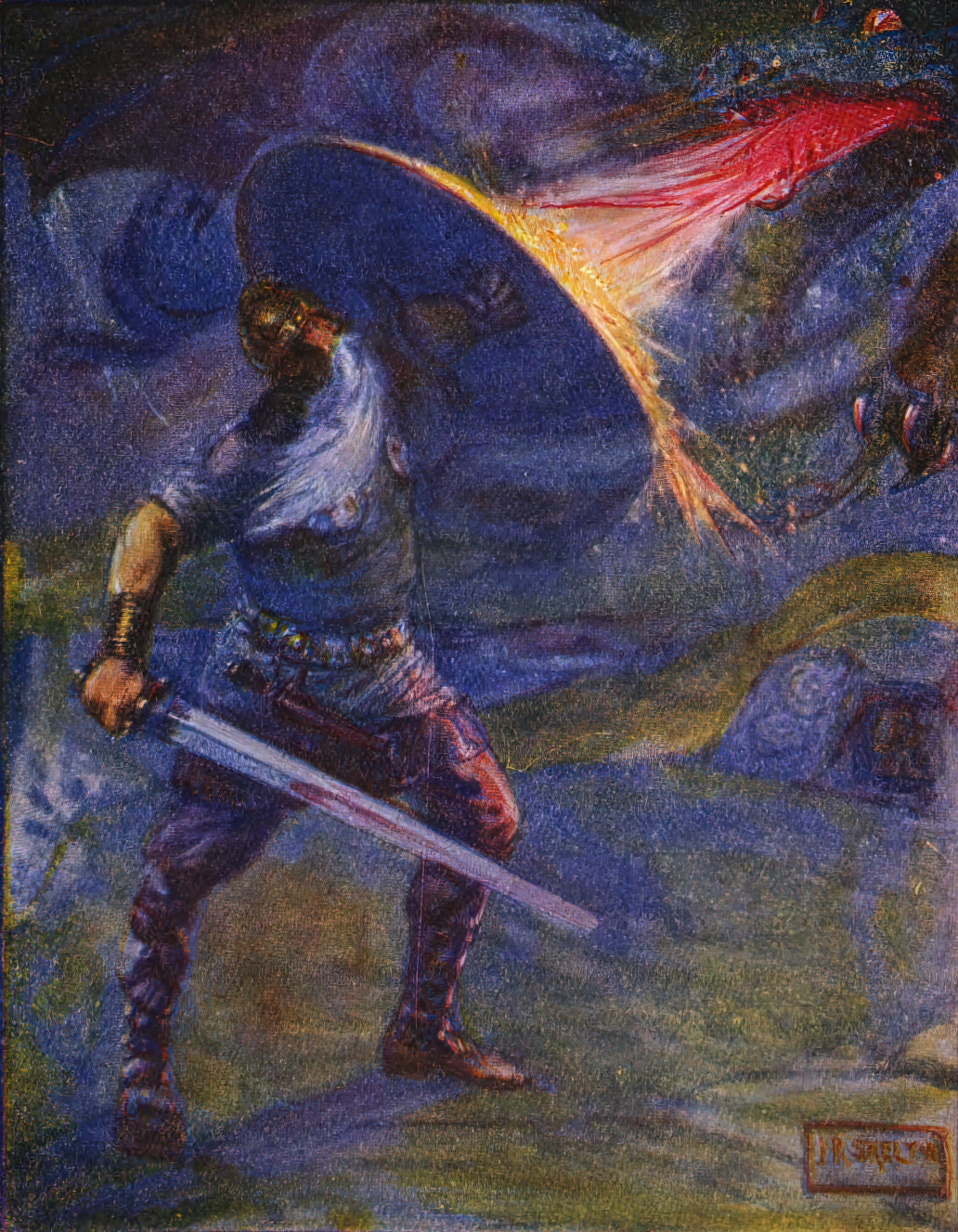
- 封面:J. R. Skelton,1908,出自 H. E. Marshall 的 Stories of Beowulf,Wikimedia Commons 原图与公版说明。这幅画表现全诗后段的屠龙,不是课堂节选中与 Grendel 徒手搏斗的画面。
本篇是基于课堂材料自行编写的双语复习笔记;参考答案、题目分组和解读用于帮助理解,并非教师发布的试题或唯一答案。
文章分享
如果这篇文章对你有帮助,欢迎分享给更多人!
本文链接
https://study.aokana.cn/posts/2026-10-18-测知札鉴-古英语诗歌与beowulf双语复习题集-177/评论区
一起讨论,一起进步
交流想法,也欢迎提出建议。
评论加载中…